 Image 1 of 2
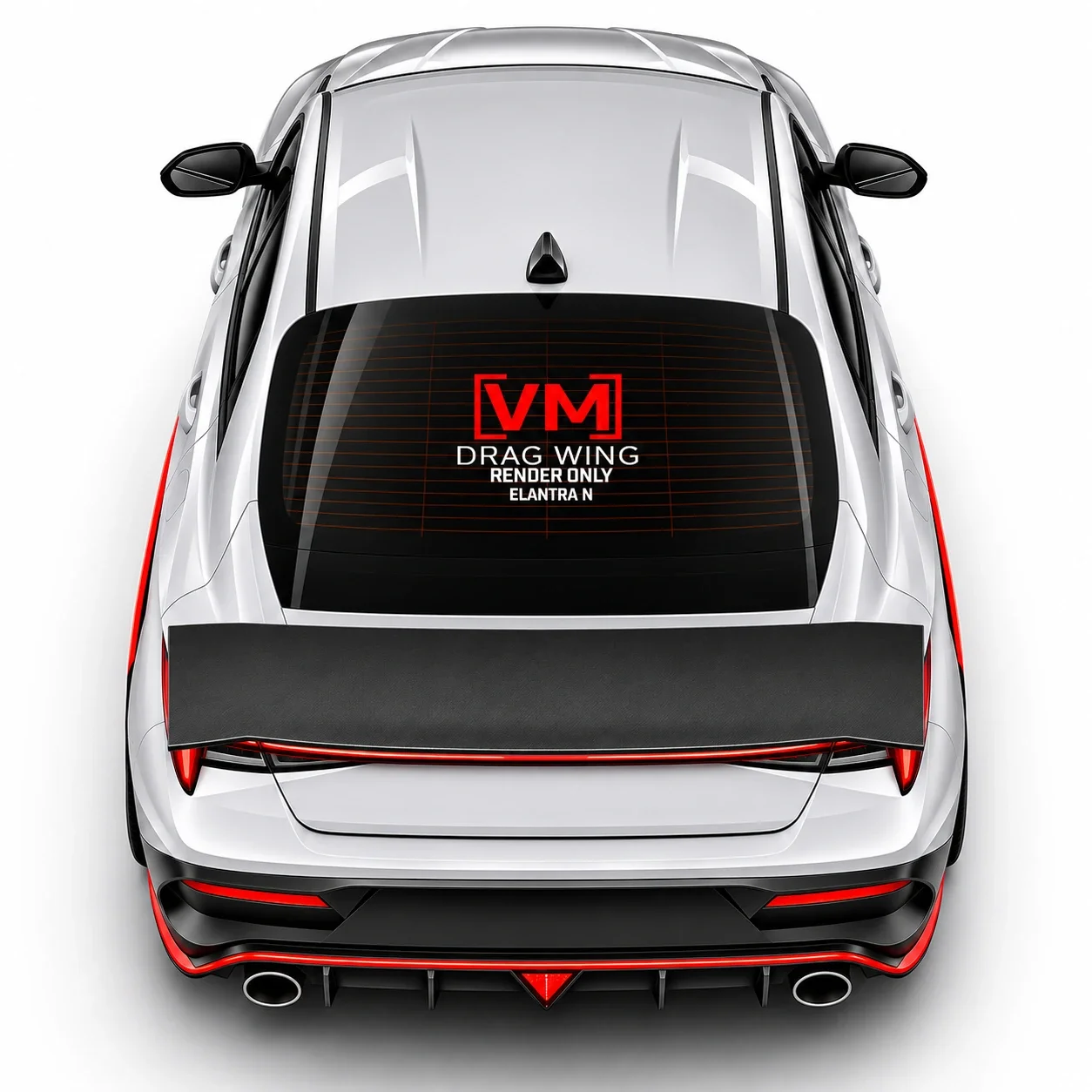 Image 2 of 2
PROJECT STATUS: CONCEPT / PRELIMINARY DESIGN — NOT CONFIRMED FOR PRODUCTION
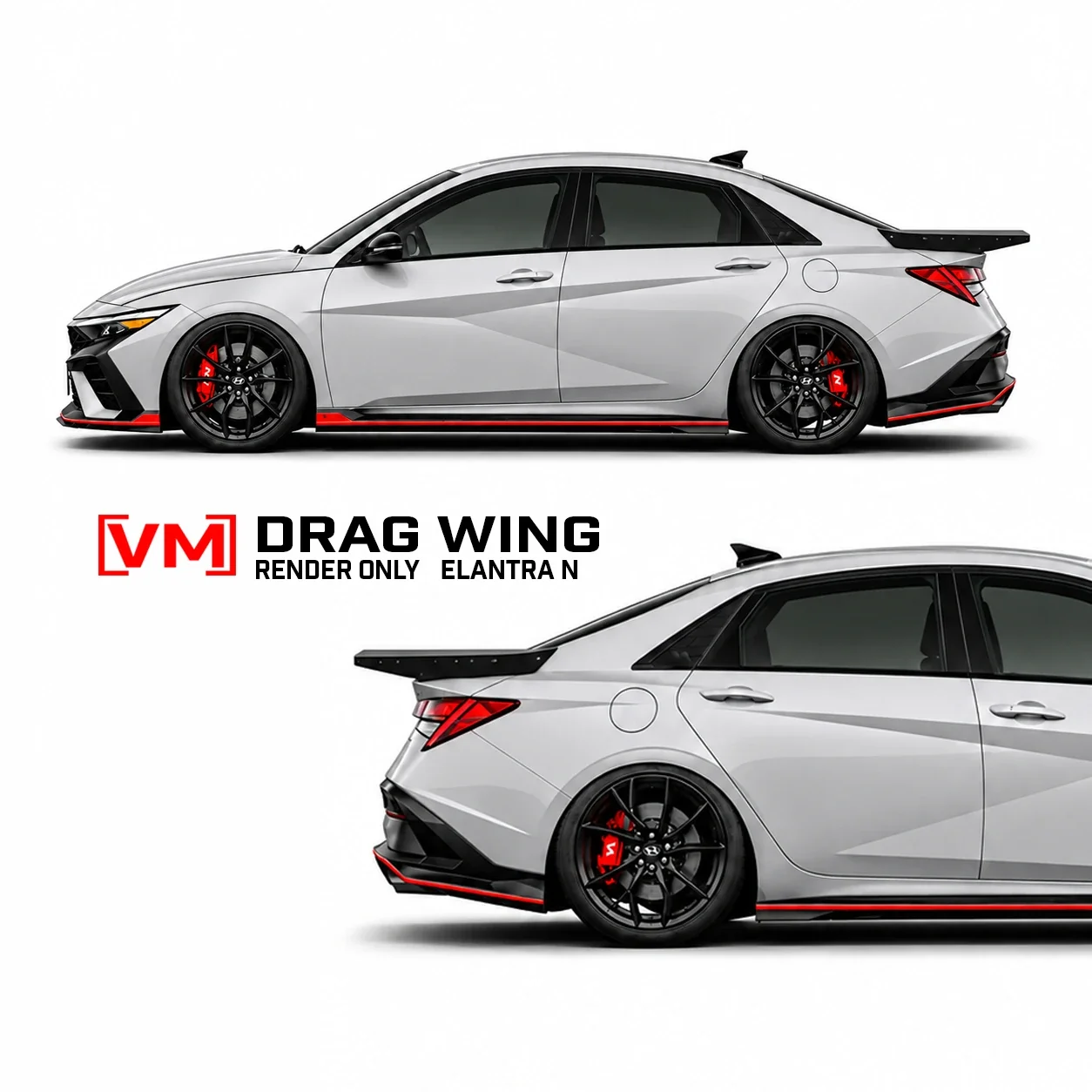
We're currently exploring the potential development of a trunk-mounted drag wing specifically for the Hyundai Elantra N platform.
With more Elantra N owners pushing into higher horsepower applications, big-turbo setups, and increasingly competitive 60–130 mph and quarter-mile performance, we believe there's an opportunity to explore a different approach to rear aerodynamics.
Rather than focusing on maximum downforce through a conventional raised wing, our concept explores a low-profile, extended rear-deck design intended to balance high-speed stability, rear lift management, and aerodynamic drag.
This project is still in its earliest stages. Preliminary designs and renderings are underway, but no final specifications, performance claims, or production plans have been established.
Aerodynamics become increasingly important as vehicle speeds rise. At highway speeds, aerodynamic forces are relatively modest, but those forces increase approximately with the square of vehicle speed.
At 120–130 mph, even relatively small changes to a vehicle's aerodynamic characteristics can become meaningful.
For front-wheel-drive vehicles like the Elantra N, rear aerodynamic stability is sometimes overlooked because the rear wheels aren't responsible for delivering engine power.
However, rear stability remains important regardless of which wheels drive the vehicle.
As speed increases, aerodynamic lift can reduce the vertical load carried by the rear tires. Managing this lift may help maintain a more stable and predictable vehicle, particularly during high-speed acceleration and in changing airflow conditions.
Our concept explores whether an extended rear-deck surface could help influence airflow separation at the rear of the vehicle while limiting unnecessary aerodynamic resistance.
The factory Elantra N rear spoiler is part of Hyundai's overall aerodynamic design. It's intended for a performance-oriented street vehicle that must balance multiple driving conditions.
Our proposed drag wing would explore a different application: straight-line performance, where aerodynamic efficiency and directional stability may take priority over maximum cornering downforce.
The concept involves extending a relatively flat surface rearward from the trunk, potentially altering how airflow separates from the vehicle.
Depending on its final geometry, this approach could offer several potential benefits:
Rear lift management: Exploring ways to reduce unwanted aerodynamic lift at elevated speeds.
High-speed stability: Investigating whether changes in rear aerodynamic loading could improve straight-line directional stability.
Drag management: Evaluating whether the extended rear-deck design can offer a favorable balance between aerodynamic resistance and rear stability.
Purpose-built design: Developing an alternative focused on straight-line applications rather than simply adapting a conventional track-oriented wing.
Whether this approach provides a measurable improvement over the OEM spoiler will require further evaluation.
Raised aerodynamic wings are highly effective tools when properly designed and positioned. They can generate significant rear downforce, which is particularly valuable during high-speed cornering.
However, generating downforce typically involves a trade-off with aerodynamic drag.
For a road-course vehicle, additional downforce can justify that trade-off through increased cornering grip.
For a straight-line vehicle focused on acceleration and terminal speed, the ideal aerodynamic balance may be different.
Our objective isn't necessarily to generate more downforce than a conventional raised wing. Instead, we're exploring whether reducing rear lift while minimizing additional drag could offer a more suitable balance for certain straight-line applications.
A relatively flat drag-wing concept may offer an alternative to aggressive, high-angle rear-wing configurations, but its effectiveness will depend on the actual airflow and aerodynamic characteristics of the Elantra N.
The goal is not simply to add more aero. It's to investigate whether we can make the existing aerodynamic package work differently for a specific application.
Although our initial interest is driven by high-performance straight-line applications, the concept may also appeal to owners looking for a distinctive rear profile.
A low-profile, extended rear-deck design could offer an aggressive drag-inspired appearance without the height and visual presence of a traditional raised wing.
For some owners, it may be a styling choice. For others, it could complement future performance modifications.
This is not an officially announced product, and production is not guaranteed.
We are currently evaluating:
Preliminary geometry, extension length, and overall dimensions.
Trunk mounting and structural requirements.
Manufacturing feasibility and material selection.
Fitment and compatibility with the Elantra N platform.
Potential aerodynamic characteristics compared with existing rear spoiler configurations.
Community interest in a purpose-built straight-line aerodynamic option.
Our current renderings and illustrative simulations are intended to communicate the design direction. They should not be interpreted as verified aerodynamic performance data.
Before considering production, we will need to determine whether the concept is structurally feasible, practical to manufacture, and capable.
VM | Design exploration. No release date, pricing, final design, or production commitment has been established.